

That’s what we are going to be hearing from now till the end of the year. It is potentially a nightmare, but it is probably being blown out of all proportion by the media. In any case, this should help you understand what it’s all about.
If no action is taken by Congress and the Administration, it could create a highly destructive instant recession. However, even our dysfunctional leadership knows that it would be political suicide to allow the full weight of the pending changes to take place. So, there is likely to be a lot of jaw-boning, posturing and ultimately some compromising.
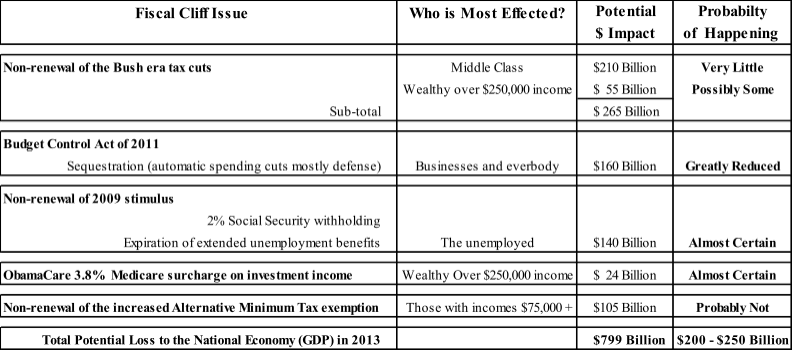
Here’s what the fuss is all about:
 (Source: Mauldin Economics)
The worst case scenario, the “Full Monty”, would be disastrous for virtually every American and would reverberate across the globe. We would be in a steep recession and unemployment would rise sharply. Stock prices would likely plummet. Even the most dim-witted politicians know that would be terrible. So, there are three other possible scenarios, with several variations on each.
What is shown above is considered a “Moderate Compromise” – accepting some of the changes before yearend and postponing the rest until some future date. According to many pundits, this is considered the most likely scenario. It would not be too harmful in the short term, but could make things worse later on.
Another possibility is the ultimate “Kick the Can Down the Road”. That means just passing legislation to defer all action until three or six months later and let the new Congress deal with it. This might appear good for the short term, but would cause foreign holders of U.S. Government debt to be concerned. It could advance the possibility of another downgrade of our bonds.
The least likely outcome is called the “Grand Bargain”. In this dream scenario, the Congress and Administration would decide to play nice and come up with a real solution. That would mean real negotiation to address the deficit problem without all the harmful automatic triggers. Take some pain now and spread the rest pain evenly and decisively over the coming years.
Whatever the ultimate outcome, everyone will be effected – some worse than others. Everybody with a job is likely to pay more into Social Security and the high income taxpayers will certainly pay more into Medicare and probably more income tax as well. The Fiscal Cliff is likely to keep the financial markets in a volatile state of flux for several months.
Meanwhile, Keith, Gary, Mark and I will be monitoring the developments and planning appropriate action. Specifically, there are several tax related actions and investment strategy actions that may be indicated. We will do our best to keep you informed.